How to Reduce Screen Time for Kids and Keep Them Learning

If you've been thinking about how to reduce screen time for kids in your house, you're not alone. Some parents are pushing back on devices in the classroom. No-device policies around bedtimes and mealtimes are more popular than ever, with many families adopting stricter rules to prevent their children from scrolling through the night. Schools are rewriting their tech policies. Lawmakers are getting involved too. But the message everywhere is the same: less screen time, more real life.
However, this message misses an important part: not all screen time is equal. An hour of passively watching a video and fifteen minutes of interactive, feedback-driven reading practice aren't the same, even though they both happen on a screen.
The real question isn't just how much time your child spends looking at a screen. It's what they're doing while they're there.
This article walks through those differences, what the experts actually say about it, and how to cut the screen time that isn't helping your child while keeping the small amount that is.
The way to reduce screen time for kids: look at quality, not just minutes
Most advice on reducing screen time treats every minute the same. Set a timer. Pick a daily limit. Swap the tablet for a board game after an hour. That advice isn't wrong, but it treats a cartoon marathon and an online phonics lesson as if they belong in the same bucket.
They don't, and experts behind the official guidance agree.
The American Academy of Child and Adolescent Psychiatry recommends limiting non-educational screen time to about one hour on weekdays and three hours on weekends for children ages 2–5, with consistent daily limits from age 6 up.
They use the distinction 'non-educational'. There is already a line being drawn between content designed to teach and content designed to entertain.
The most effective online educational programs are designed for short, high-impact sessions. For example, parents see results when their child uses Reading Eggs for just 15 minutes a day.
So, when you're figuring out how to reduce screen time for kids, the goal isn't zero. It's cutting the passive scrolling and keeping the small amount of time that's actually doing something for your child.
Deep dive: Top Five Educational Screen Time Benefits
What makes screen time actually count
Plenty of apps call themselves educational. While some of them are, many are not, so it helps to know what you're actually looking for.
It's short. A few focused minutes beats an hour of half-attention. Kids learn better in short, engaged bursts than long, passive stretches.
It's active, not passive. Your child should be doing something (answering, choosing, sounding out a word) rather than just watching something happen.
It gives immediate feedback. Good educational content tells your child right away whether they got something right, and adjusts based on what they need next.
It builds toward something. Each session connects to the last one, so your child is progressing through a skill, not just repeating the same activity.
A program that does all four is a different category of screen time to a video that plays automatically in the background. That's the line worth drawing, more than a strict minutes-per-day number.
Why hearing the sounds matters for learning to read
There's one thing a screen can do that a book or a worksheet can't. It can say the sound out loud.
That matters more than you might think. Phonemic awareness, the ability to hear and play with the individual sounds inside words, is one of the five building blocks of learning to read, and children pick it up by hearing sounds modeled correctly, over and over. A worksheet can show your child the letter 'b'. It can't make the sound. A much-loved picture book can do a lot for your child, but it can't teach a brand-new reader to sound out the words on its own pages.
It's also why "just give them a book instead" doesn't quite work. Once your child can already read, it’s a no-brainer. But if they're still learning, handing them a book they love doesn't necessarily teach them to read it. Someone has to show them how to decode the words first, sound by sound. A well-designed reading program does just that.
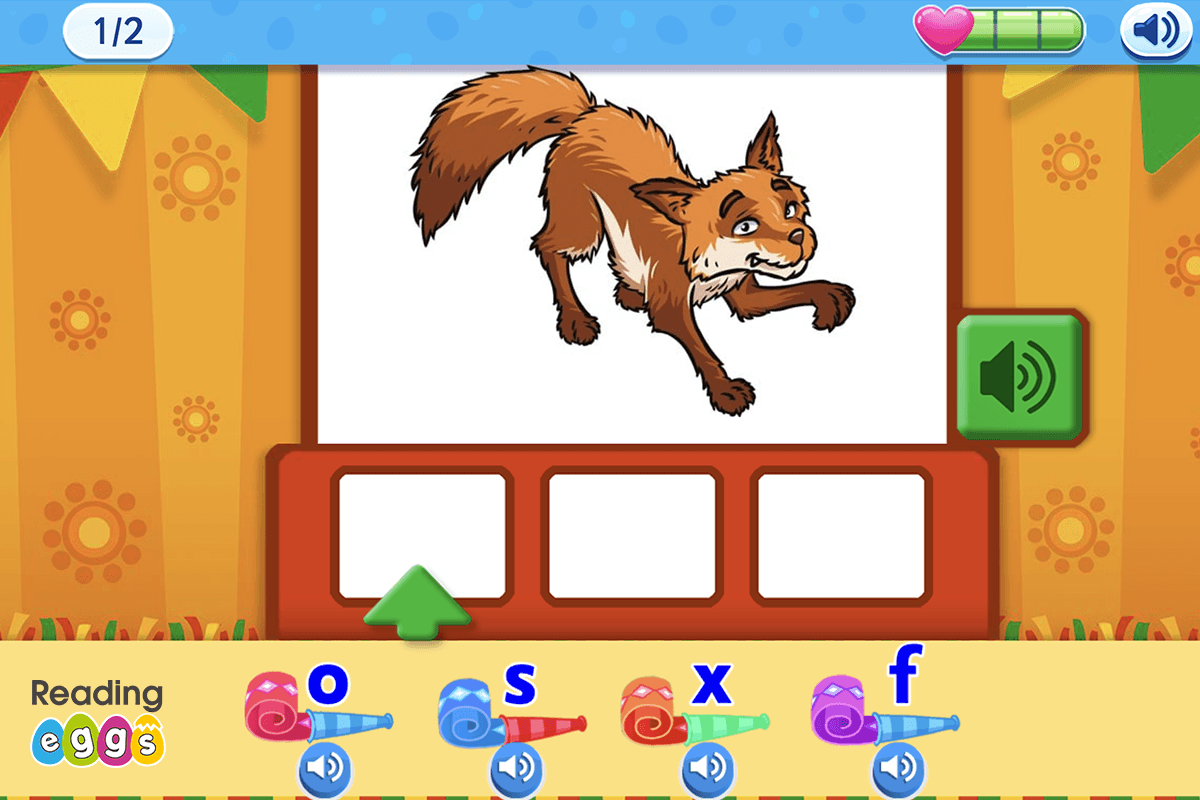
Online reading programs like Reading Eggs help children learn the sounds letters make and not just teach them letter recognition. This is a crucial step in learning to read. Free trial
How much screen time is right for your child?
The World Health Organization recommends no more than one hour of total screen time a day for children ages 2 to 5, and none at all for children under age one.
So where does a reading program fit? Fifteen minutes a day on Reading Eggs is enough to build early reading skills, and it sits well inside the WHO's daily limit, with plenty of room left over for everything else your child does.
There's some research worth noting here as well. An independent classroom study found that when second graders used Reading Eggs as a 30-minute daily supplement over six weeks, 93% moved up at least one reading level, against 19% in a control group. So it’s proven to build real reading skills in just a short amount of time, without blowing your screentime budget.
Turn it into a two-part habit: screen time plus offline practice
Here’s another question worth asking about any screen time in your house: when the screen goes off, does anything carry over?
Every Reading Eggs lesson has a matching printable worksheet in your Family Dashboard, so whatever your child just practiced on screen gets reinforced again on paper. It isn't a test. It's an excuse to sit down together for ten minutes, and review what they’ve learned online. Studies also show that writing by hand improves long-term memory retention, so it’s a great way to support your child’s learning offline too. If you’re looking for more offline resources, the Reading Eggs Book Shop has workbooks and activity books designed to run alongside the program.
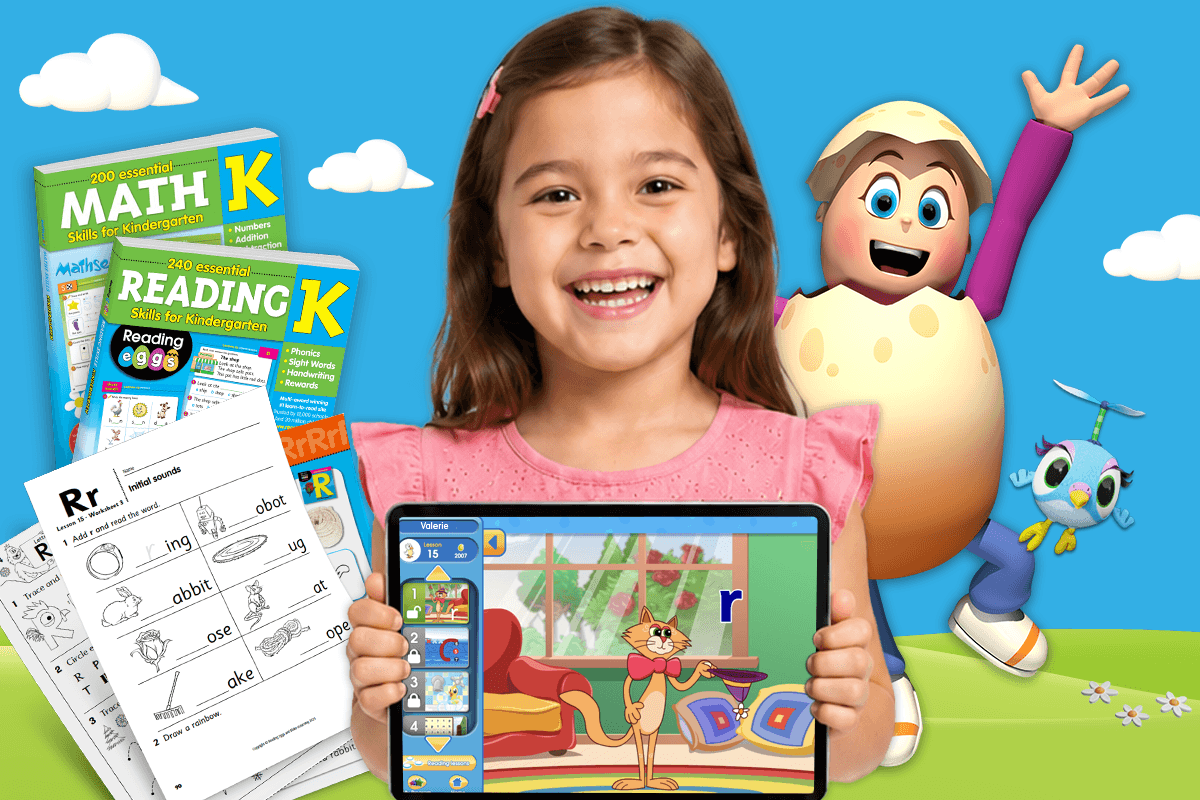
Blending online and offline options can help reduce screen time and keep kids learning. This approach also helps children retain what they have learned for longer. Start your FREE 30-day trial of Reading Eggs today and explore the many learning options available.
What to do with the rest of the day
Once you have identified the valuable screen time, the rest of the day is where the actual reducing happens. Some places to start:
Make mealtimes and the hour before bed screen-free, every day, no exceptions.
Have two or three outdoor games ready to go for the moments a screen would otherwise fill.
Keep a small stash of hands-on activities for wet afternoons and the days when nobody has any energy.
Ask your child about what they watch or play, the same way you'd ask about their day at school.
Frequently asked questions about screen time and kids
Is educational screen time bad for kids?
Not really. Most screen time guidance is aimed at passive content: videos, endless scrolling, open-ended games. Short, active, feedback-driven learning is already treated as a separate thing by the [organisations] writing that guidance, including the American Academy of Child and Adolescent Psychiatry's own non-educational carve-out.
How much screen time should my child have each day?
The World Health Organization recommends no more than one hour a day for children ages 2 to 5, and none under age one. The American Academy of Child and Adolescent Psychiatry adds more detail for non-educational content by age. Where the time goes matters as much as how much of it there is.
How to manage screen time for kids without a daily fight
Set the boundary once and keep it consistent, so meals and bedtime are simply screen-free rather than something to negotiate every evening. And give your child a short, engaging option instead of only ever saying no. It's a lot easier to redirect a four-year-old than to stop one.
Does a program like Reading Eggs count toward my child's daily screen time?
Yes. It's time on a screen and it should count toward whatever total you've set. What's different is what's happening during those minutes. Fifteen minutes of active reading practice fits comfortably inside the World Health Organization's one-hour guidance, and leaves the rest of the day free.
Getting started
The amount of time kids spend on screens is worth worrying about. But the fix isn't only less of it. It's making sure what's left is valuable and helping their development. If you'd like to see what that looks like in practice, you can start your free 30-day trial of Reading Eggs and try a short daily lesson with your child today.

You might also like


Discover Topics

